
Key Executive Takeaways
- Seating hierarchy is the foundation of respect and reflects the professional standing of all attendees.
- The business banquet is a strategic environment for building Guanxi (relationships) rather than closing deals.
- Mastering simple toast rituals and Mandarin greetings demonstrates cultural intelligence and professional authority.
For the modern executive, a business trip to China is often defined by the formal banquet. In Chinese culture, the dinner table is not just a place to eat; it is a vital arena for building Guanxi—the deep, reciprocal relationships that underpin all successful business ventures. Understanding the nuanced etiquette of the banquet is not merely about politeness; it is a clear signal of your professional competence and respect for your partners.
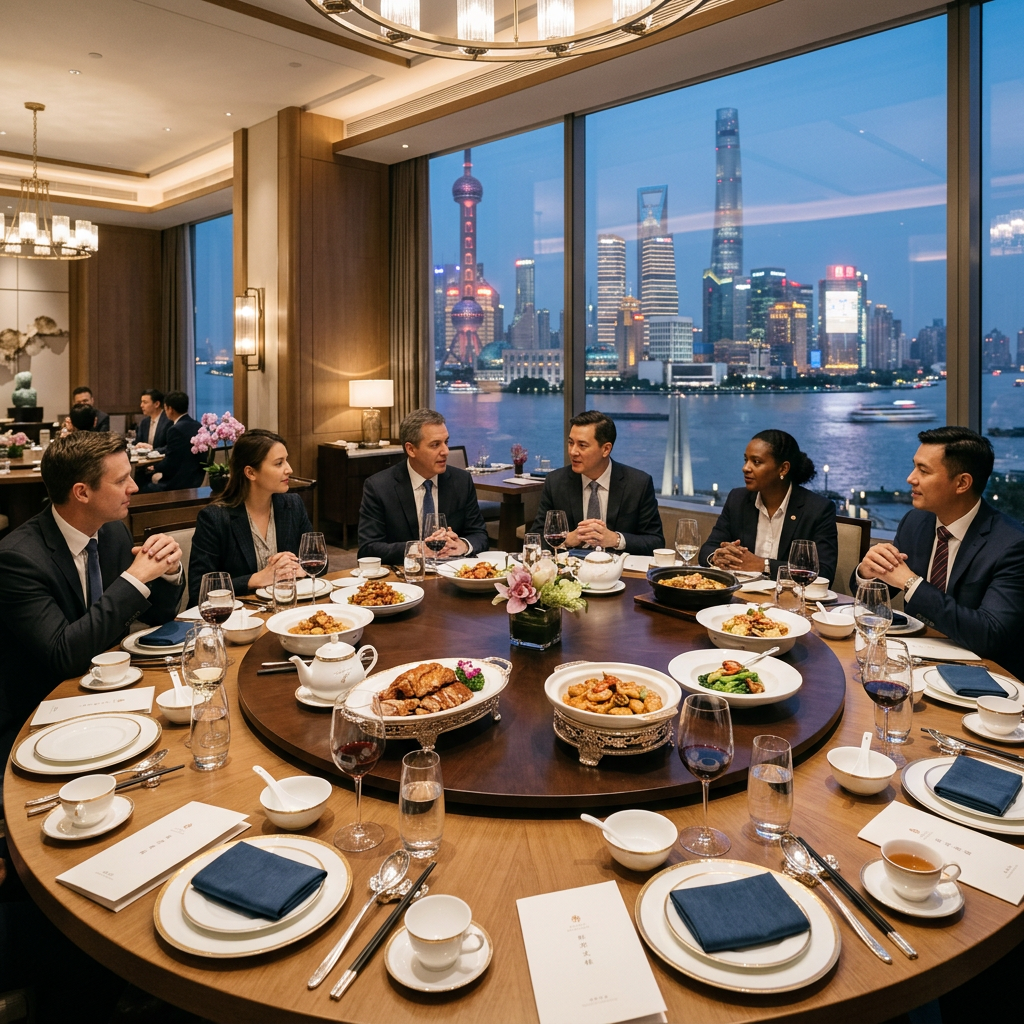
1. The Strategic Importance of the Dinner Table
Unlike Western business dinners where the agenda might be explicit, Chinese banquets are about establishing trust and mutual understanding. The goal is to see if you are a person your partners can rely on long-term. If you have already reviewed our Professional China Travel Checklist, you know that infrastructure is key—but cultural infrastructure is equally critical.
2. Understanding the Seating Hierarchy
Seating in a formal Chinese banquet is strictly hierarchical. The host typically sits at the center of the table, facing the entrance to the room. The most important guest (the guest of honor) sits directly to the host’s right. The second most important guest sits to the host’s left. As a visiting executive, always wait to be shown to your seat to avoid an accidental breach of protocol.
3. The Art of the Toast (Ganbei)
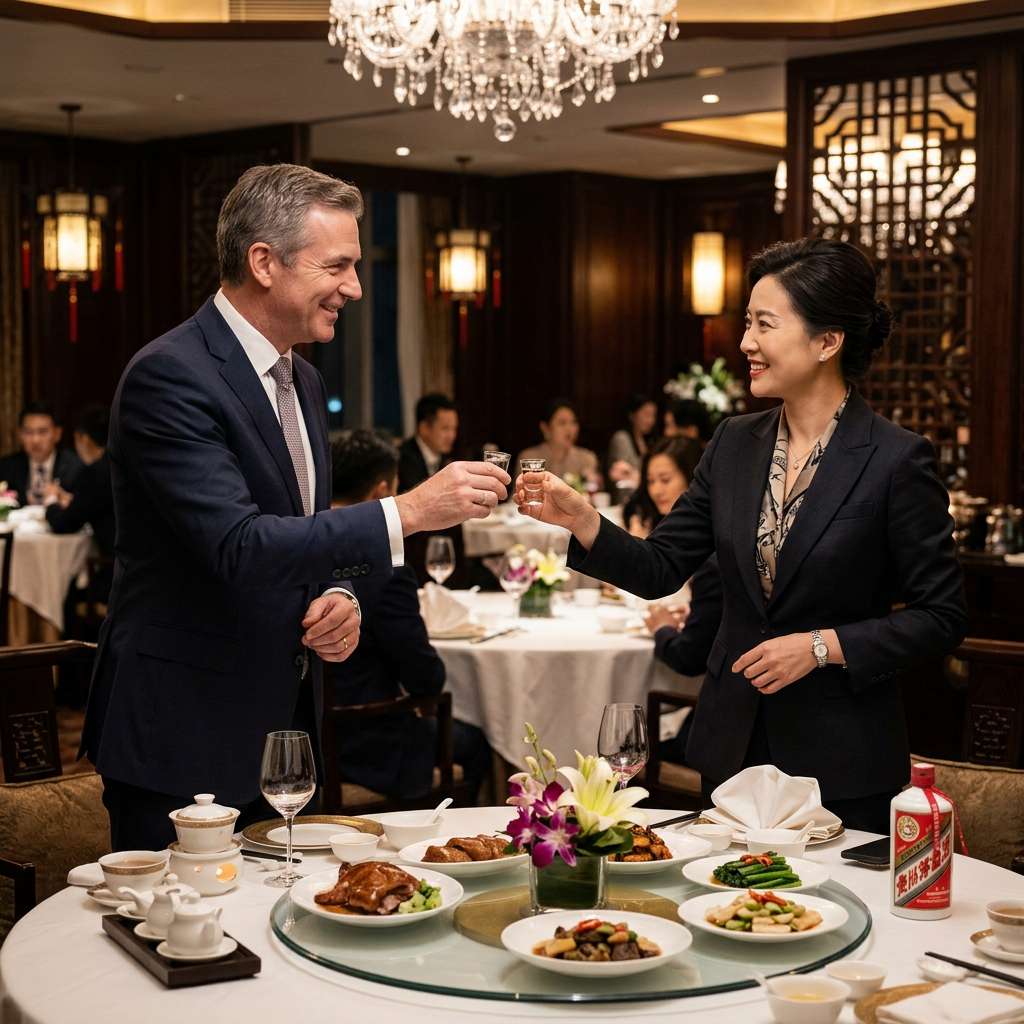
Toasting is perhaps the most active part of the banquet etiquette. The host will usually initiate the first toast to welcome everyone. When you are toasted, or when you initiate a toast yourself, remember these professional nuances:
- Height Matters: When clinking glasses, ensuring yours is slightly lower than your host’s is a powerful sign of humility and respect.
- Two-Handed Respect: Always hold your glass with two hands when receiving or giving a toast.
- Ganbei: While the term literally means “dry cup,” it is perfectly acceptable for executives to take a sip, especially if you have clarified your preference politely beforehand.
4. Essential Mandarin for the Banquet
Using even basic Mandarin in a professional dining setting shows an ROI on your cultural preparation. It signals that you are invested in the partnership beyond the balance sheet. Here are high-utility phrases for the table:
- 干杯 (gān bēi): “Cheers!” (used during toasts)
- 您先请 (nín xiān qǐng): “After you.” (polite way to invite the host to start eating or to enter the room)
- 辛苦了 (xīn kǔ le): “Thank you for your hard work.” (excellent to say to the host or organizing staff)
- 合作愉快 (hé zuò yú kuài): “To a happy cooperation.” (a standard and effective professional toast)
5. Navigating the Lazy Susan
Most banquet tables feature a large rotating glass center (the Lazy Susan). The professional rule is simple: wait for the host to serve themselves or the guest of honor before you begin. Never spin the table while someone else is serving themselves. For more detailed advice on specific dishes, see our Professional Food Guide.
Closing the Evening with Authority
The host usually signals the end of the banquet by serving a final course (often fruit) or a final toast. Unlike Western dinners, there is no long, drawn-out goodbye at the table. Once the host stands, the evening concludes quickly. Follow their lead, express your gratitude for the hospitality, and reiterate your commitment to the partnership.
Mastering these rituals allows you to navigate the complexities of the Chinese market with confidence and authority. For personalized support in preparing your team for high-stakes banquets, consult our Executive Support services.