
Key Executive Takeaways
- High-speed rail is often more efficient and reliable than domestic flights for inter-city travel between major hubs.
- Business Class (商务座) offers world-class comfort, productivity tools, and dedicated station lounges for executives.
- Advance booking and digital ticket management are essential for high-stakes professional scheduling.
For the modern professional, time is the most valuable currency. In China, the high-speed rail (HSR) network, or Gaotie (高铁), is not just a mode of transport—it is a strategic productivity tool. Often faster than flying once airport transfers are considered, the HSR offers a seamless, reliable environment for work or rest between meetings.
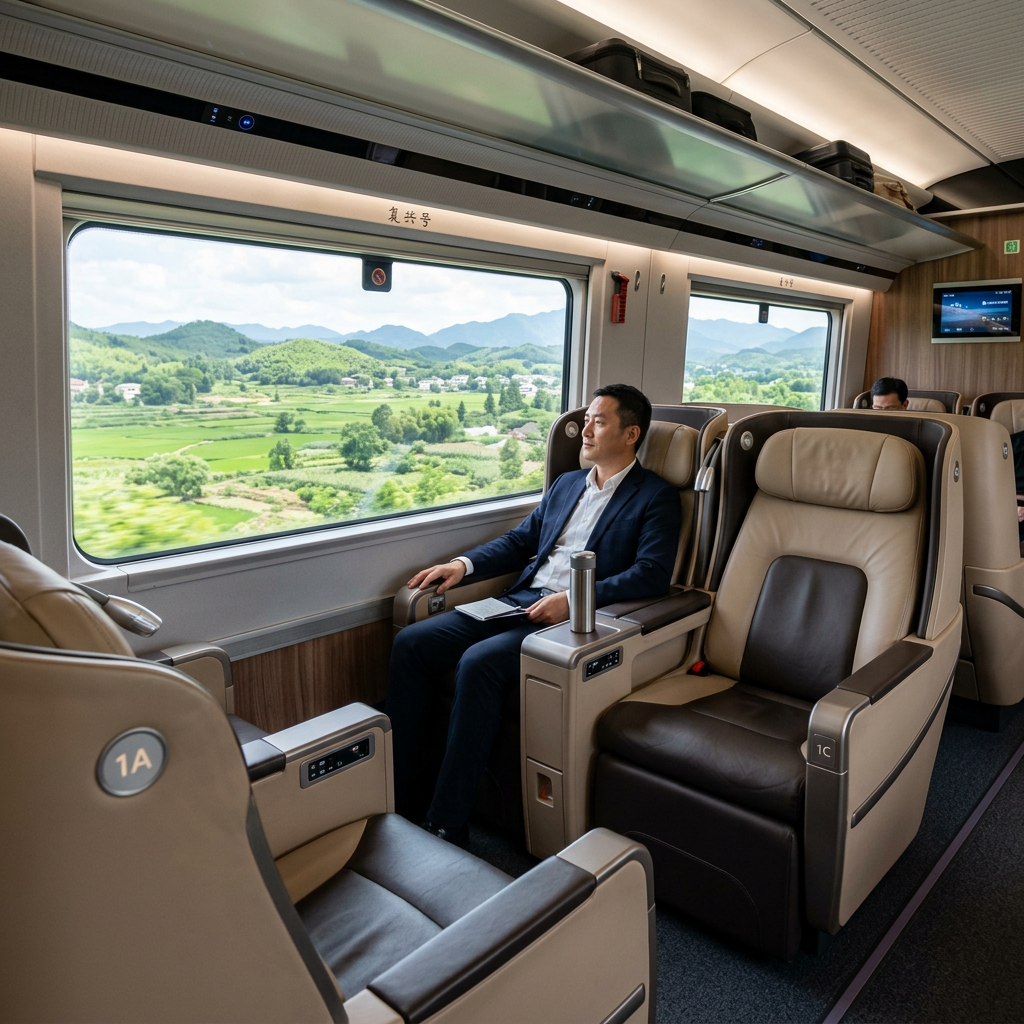
The Business Class Advantage
While First Class (一等座) is excellent, Business Class (商务座) is a significant step up, rivaling international long-haul aviation standards. Features include fully reclining seats, high-speed charging ports, and dedicated meal service. For executives traveling between Beijing and Shanghai, this environment allows for uninterrupted focus on strategy or high-level preparation.
Station Logistics and Lounges
Major hubs like Beijing South and Shanghai Hongqiao are massive, modern terminals. Business Class ticket holders have access to dedicated lounges with quiet areas and refreshments, allowing you to bypass the main terminal crowds. Digital ticketing is now standard; your passport is your ticket at the automated gates. For more on logistical readiness, see our Executive Exploration guide.
Mandarin for the Rails
Navigating the station requires a few key professional phrases:
- 商务座 (shāng wù zuò): “Business Class seat.”
- 检票口 (jiǎn piào kǒu): “Ticket gate” (check your boarding gate on the large screens).
- 晚点 (wǎn diǎn): “Delayed” (though rare, it is an important term to recognize).
By choosing the HSR, you align your travel with the efficiency and modern infrastructure that defines today’s China. For high-level support in managing your travel logistics, consult our Executive Support team.