
Key Executive Takeaways
- Yunnan is ideal for unhurried, slow exploration and cultural immersion for professionals.
- Scenic bases like Dali and Lijiang offer mild climates and premium guesthouse accommodations.
- Practical Mandarin significantly improves local logistics and deepens cultural engagement.
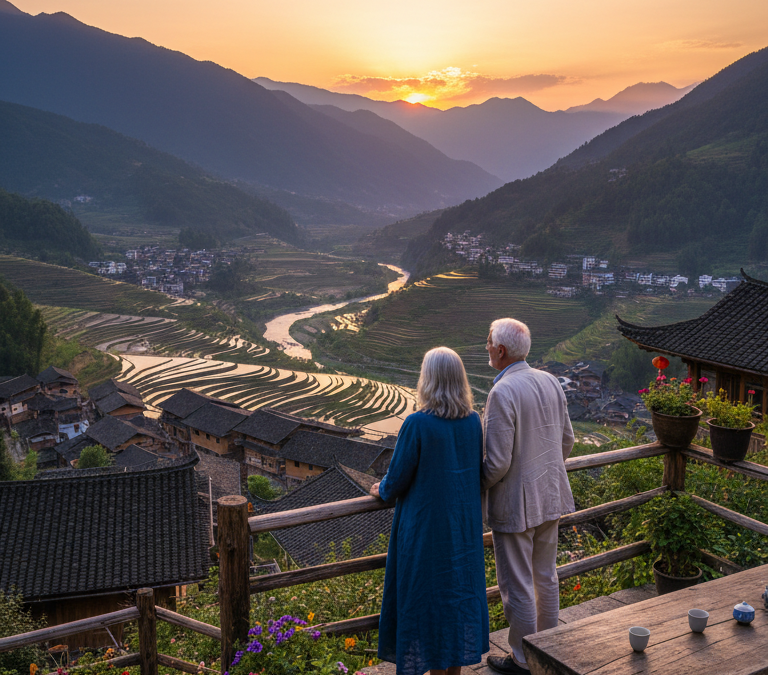
For older and well-traveled adults, Yunnan offers something that can be surprisingly hard to find in modern travel: space, stillness, and scenery that invite you to slow down. Tucked in China’s southwest, this diverse province blends snow-capped mountains, tea fields, ancient towns, and minority cultures into an itinerary that rewards unhurried exploration. For an executive overview of your trip requirements, see our China Travel Checklist or consult our Executive Support team.
If you have already visited popular Asia destinations like Thailand, Vietnam, or Japan and are wondering what could still feel new, Yunnan is a compelling answer. With the right planning and a few practical Mandarin phrases, it can become one of the most memorable and comfortable trips you take in China.
Why Yunnan Works So Well for Slow, Mature Travel

Yunnan is often described as one of China’s most beautiful provinces. For mature travelers, its appeal goes beyond scenery:
- Varied landscapes in a compact area – lakes, old towns, rice terraces, and mountains can be combined without exhausting travel days.
- Mild climate in many regions – especially around Dali and Kunming, where temperatures are often described as “spring-like.”
- Flexible pacing – you can design days around walks, views, and local markets rather than relentless sightseeing.
- Rich cultural mix – Han Chinese, Bai, Naxi, and other minority groups each add their own architecture, music, and cuisine.
Compared with large, high-energy cities, Yunnan’s smaller towns and quieter streets can feel more forgiving for those who prefer slower, more thoughtful travel.
Dali: Lake Views and Laid-Back Days
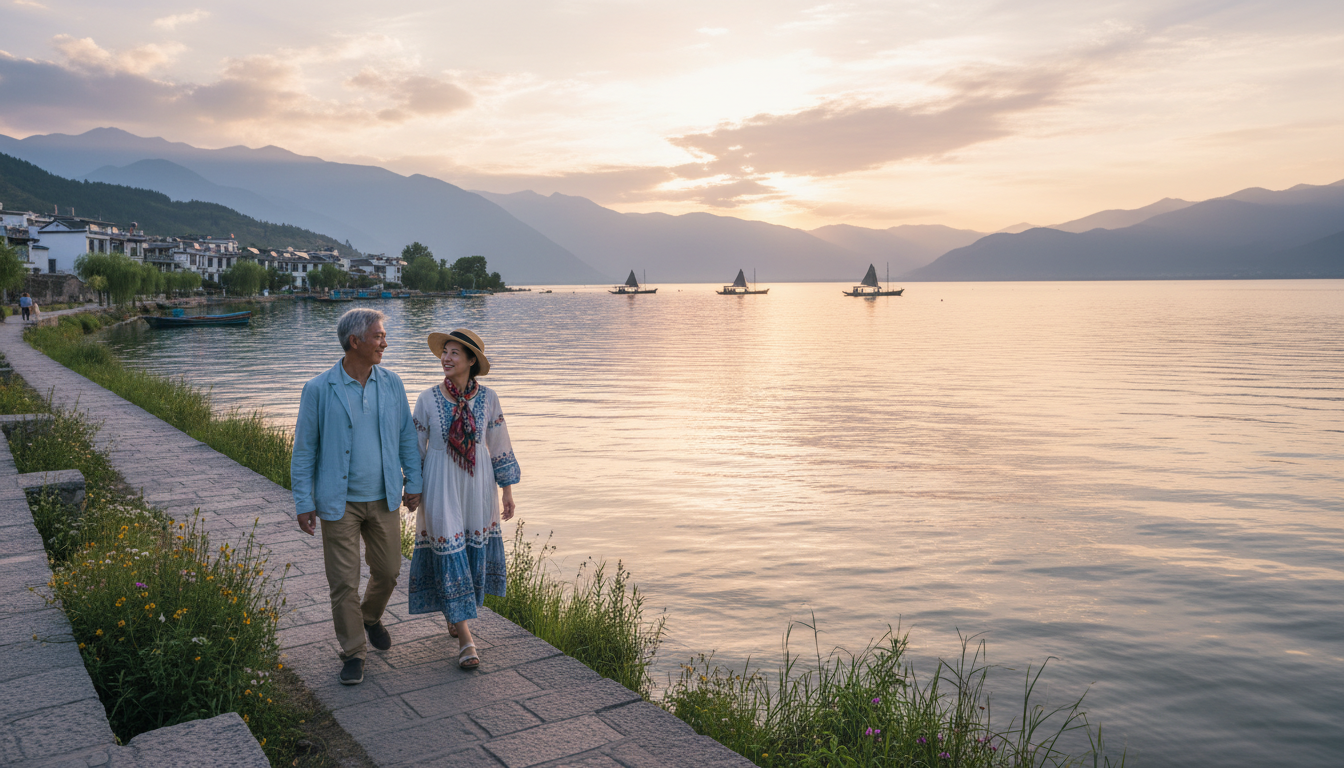
Dali (大理, Dàlǐ) is one of Yunnan’s most popular bases for visitors who enjoy gentle walks, scenic views, and a relaxed daily rhythm. The town sits beside Erhai Lake, with mountains rising behind it and a mix of traditional Bai architecture and modern cafes in between.
For seasoned travelers, Dali offers:
- Lakeside paths where you can walk as much or as little as you like.
- Small guesthouses and boutique hotels that emphasize views, gardens, and quiet courtyards.
- Cafes and tea houses where you can spend an unhurried afternoon reading, journaling, or simply watching local life.
- Nearby villages reachable by short drives, allowing for half-day rather than full-day outings.
Many visitors pair Dali with Lijiang, another atmospheric town a few hours away, to create a comfortably paced week or more in northern Yunnan.
Lijiang: Old Town Charm and Mountain Backdrops
Lijiang (麗江, Lìjiāng) is famous for its Old Town: stone lanes, wooden houses, canals, and flowering plants that spill from balcony railings. While it can be busy in high season, it also offers quieter corners and beautiful evening walks when you plan your visit thoughtfully.

Lijiang works particularly well for travelers who enjoy:
- Evening strolls through lantern-lit lanes.
- Short outings to nearby viewpoints and villages, often with car access most of the way.
- Mountain scenery visible from many hotels and cafes, even if you prefer not to hike.
- Cultural performances and music that showcase Naxi traditions.
For those comparing China with other Asia destinations, Lijiang often feels like a unique blend of traditional village atmosphere and simple modern comforts—an experience that is hard to replicate elsewhere.
Kunming and Beyond: Easy Climate, Gentle Urban Energy
Kunming (昆明, Kūnmíng), often called the “Spring City,” has a mild climate and a calmer pace than many of China’s megacities. For some itineraries, it makes sense as an arrival point before heading on to Dali or Lijiang. For others, it becomes a relaxing base in its own right.
Kunming’s highlights for mature travelers include:
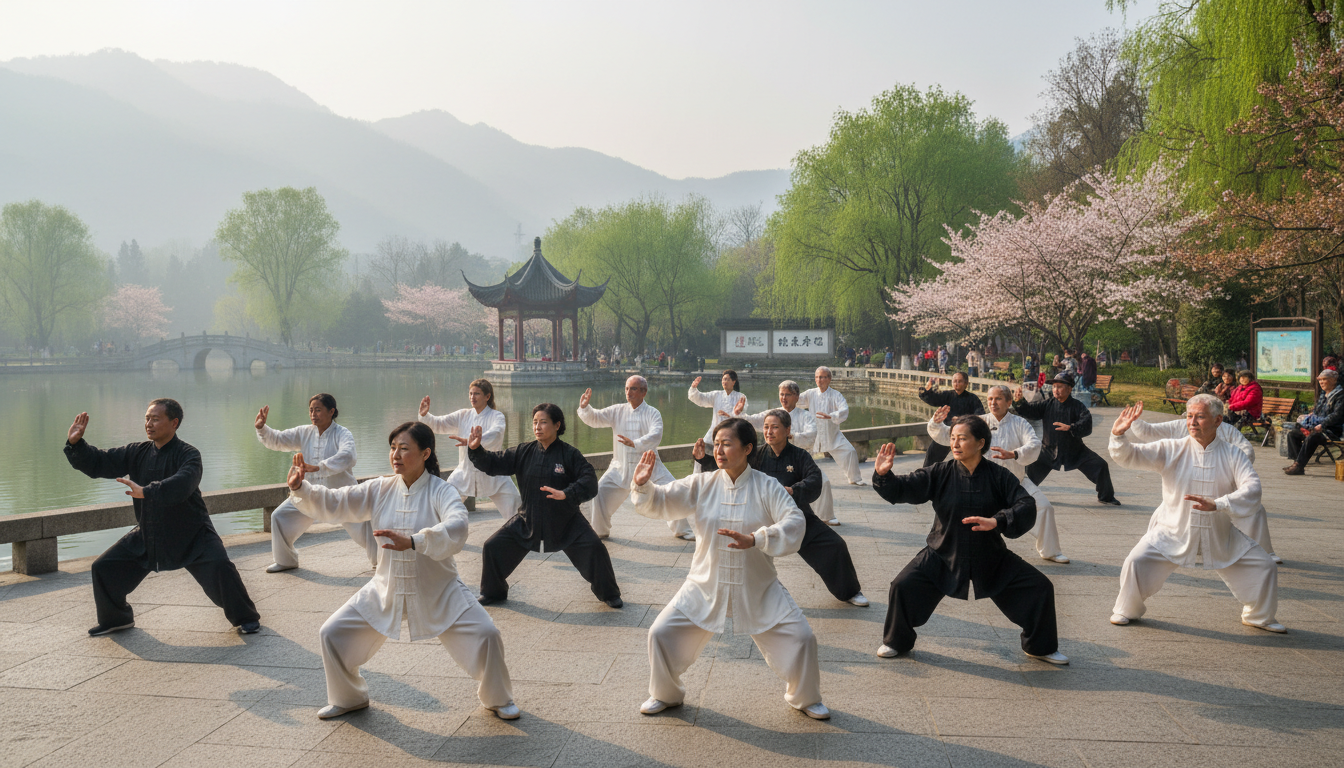
- Parks and lakes where you can observe everyday local routines, from tai chi to dancing.
- Easy day trips to nearby scenic areas without overly long drives.
- Comfortable hotels that often feel calmer than those in larger Chinese cities.
For travelers who have already visited major Asian capitals, Kunming’s scale and atmosphere can feel pleasantly manageable.
Designing a Slow-Travel Itinerary in Yunnan
One of Yunnan’s great strengths is how well it lends itself to flexible, unhurried itineraries. Instead of rushing to “see everything,” you can focus on a few well-chosen bases and give yourself time to actually enjoy them.
- Choose 2–3 main bases such as Dali, Lijiang, and Kunming, and stay at least three nights in each.
- Plan half-day excursions rather than full-day marathons.
- Build in rest days where the agenda is simply to sit by the lake, enjoy tea, or explore one neighborhood at a time.
- Use comfortable transport such as private drivers or higher-class train seats when you change locations.
Practical Mandarin for Yunnan: Simple Phrases, Big Impact
In many parts of Yunnan, especially outside the most touristy streets, English may be limited. That is exactly why a small, carefully chosen set of Mandarin phrases can make such a difference for your comfort and confidence.
At Travel Ready Chinese, we focus on giving travelers practical language tools they can actually use in places like Dali and Lijiang—not textbook sentences, but phrases for hotels, cafes, drivers, and simple conversations.
Essential Greetings and Courtesy
- 你好 (nǐ hǎ o) – Hello
- 謝謝 (xièxie) – Thank you
- 辛苦了 (xīn kǒ le) – You’ve worked hard / Thank you for your effort (a warm phrase often used with drivers, guides, or staff)
- 再見 (zàijiàn) • Goodbye
At Your Hotel or Guesthouse
- 我有預訂。(wǒ yǒu yùdìng.) – I have a reservation.
- 可以幫我叫出租車嗎?(kěyǐ bāng wǒ jiào chūzūchē ma?) – Can you help me call a taxi?
- 可以晚一點退房嗎?(kěyǐ wǎ n yīdiǎ n tuìfáng ma?) – Is it possible to check out a little later?
In Cafes and Restaurants
- 請給我菜單。(qǐng gěi wǒ càidān.) – Please give me the menu.
- 不要太辣。(bú yào tài là.) – Not too spicy, please.
- 可以少鹽嗎?(kěyǐ shǎ o yán ma?) – Can you use less salt?
- 徨好吃,謝謝。(hěn hǎ o chī, xièxie.) – It’s very delicious, thank you.
Getting Around
- 去大理古城。(qù Dàlǐ gǒchéng.) – Go to Dali Old Town.
- 去麗江古城。(qù Lìjiāng gǒchéng.) – Go to Lijiang Old Town.
- 這裡停一下。(zhèlǐ tíng yīxià.) – Please stop here.
Even if you only use a handful of these phrases each day, they can change the tone of your interactions—turning simple transactions into small, human moments that many seasoned Asia travelers value most. For a full breakdown of travel prep, consult our China Travel Checklist.
Health, Comfort, and Altitude Considerations
Like many beautiful mountain regions around the world, parts of Yunnan sit at higher elevations. Dali and Lijiang are both above sea level, which some travelers notice in the first day or two. For most healthy visitors, this is manageable with a sensible pace, but it is worth discussing with your doctor in advance if you have heart or lung conditions.
- Plan lighter activities on your first day at higher elevation.
- Drink plenty of water and avoid overexertion, especially on stairs or inclines.
- Choose accommodation with easy access (minimal steps) if mobility is a concern.
- Consider travel insurance that covers medical care in China, as you would in any long-haul Asia trip.
Many mature travelers find that with thoughtful planning, Yunnan feels no more physically demanding than other popular nature destinations around the world.
Why Learn Mandarin Before a Yunnan Journey?
When you compare Yunnan with other Asia travel options, one of its distinct features is how rewarding even simple Mandarin can be. In smaller towns, a friendly greeting or a few polite phrases often leads to smiles, extra care, and sometimes invitations to sit, taste, or chat.
At Travel Ready Chinese, we design our lessons for travelers exactly like you—mature, experienced, and more interested in genuine experiences than in racing through a checklist of sights. Our focus is on:
- High-utility phrases you can actually use in guesthouses, cafes, markets, and with drivers.
- Clear pronunciation guidance so your Mandarin is understandable and you feel confident speaking.
- Realistic travel scenarios built around places like Dali, Lijiang, Shanghai, and beyond.
With even a short period of focused study before your trip, you can arrive in Yunnan better prepared to handle practical details and to connect more deeply with the people you meet.
If you are considering where to go next in Asia and want a destination that balances scenery, culture, and a slower rhythm, Yunnan deserves a serious look. Pair it with a bit of travel-focused Mandarin, and you may find that this corner of southwest China leaves a deeper impression than anywhere you have been before.